Apparently our brains didn’t get the memo.
YDC Edit
11/06/2026
One of us photographs it. One of us sketches it. Eventually, some of it finds its way home.
We pay attention for a living.
Which means travel for us has never been entirely about getting away from work. Quite the opposite. We may be very far from Shea, but apparently our brains didn’t get the memo.
We notice everything.
The worn stone floor that has somehow become more beautiful after a hundred years of feet crossing it. The shape of a doorway. A perfectly proportioned bar. The weird little chair tucked into a corner. The way a restaurant handles arrival. The light coming through an old window at four in the afternoon. Great signage. Terrible signage.
Sometimes it’s extraordinary architecture. Sometimes it’s a doorknob.
We’re not terribly discriminating when curiosity takes over.
And we each have our own way of trying to remember it.
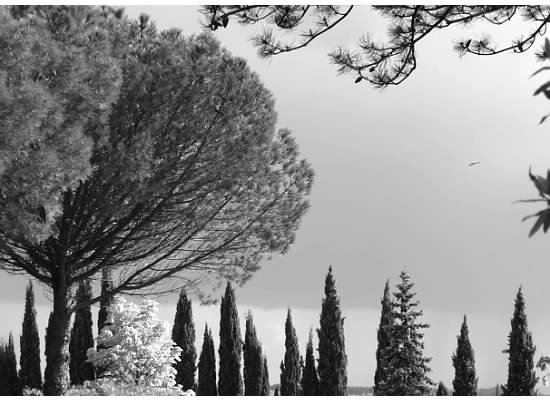
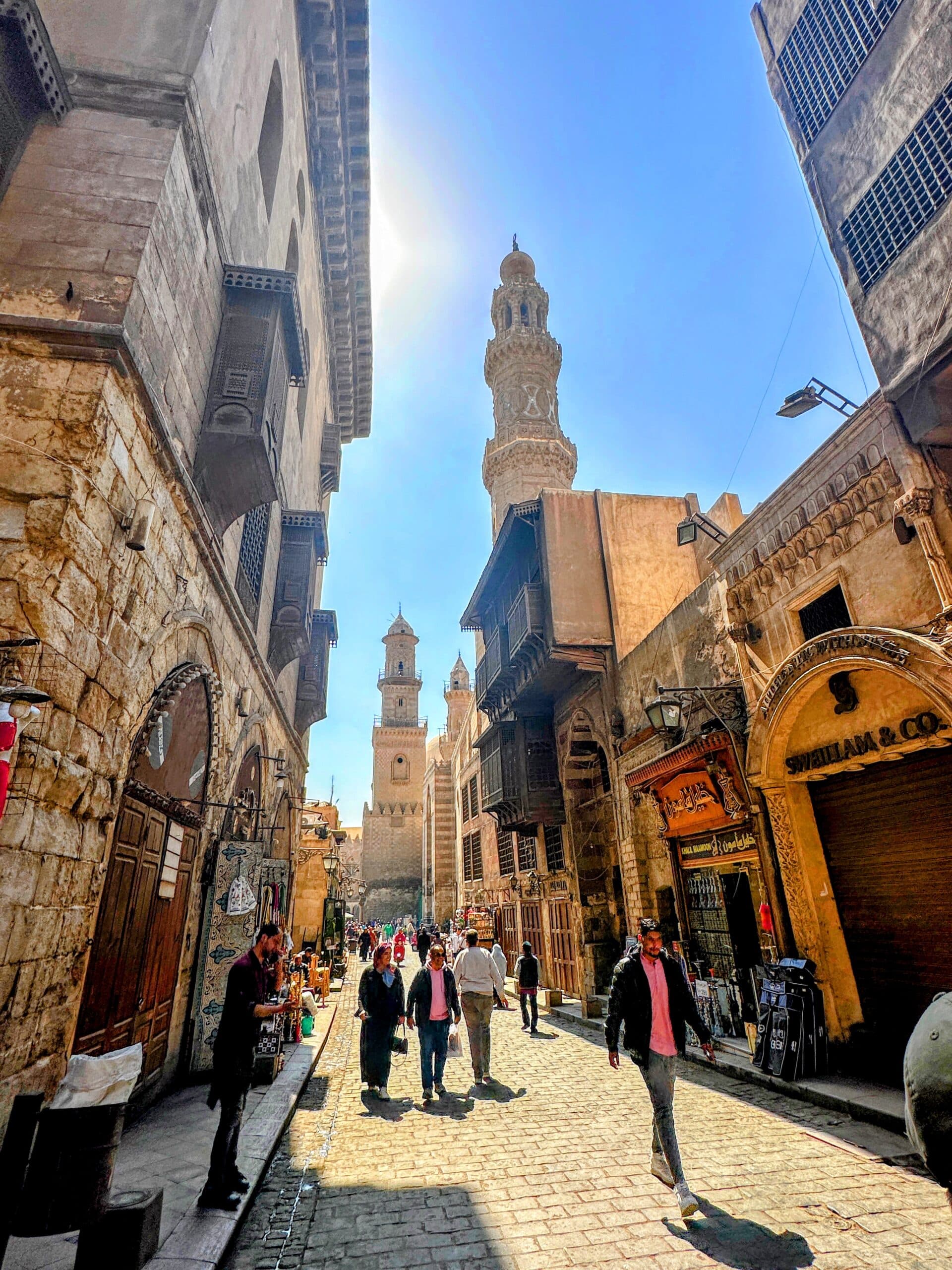
I photograph everything. Constantly. Big sweeping landscapes, certainly, but more often the little things—the color of a wall, a table setting, a beautiful piece of hardware, someone’s laundry hanging across an alley, the way the light hits a building.
My phone and camera are essentially one very large, poorly organized visual filing cabinet.
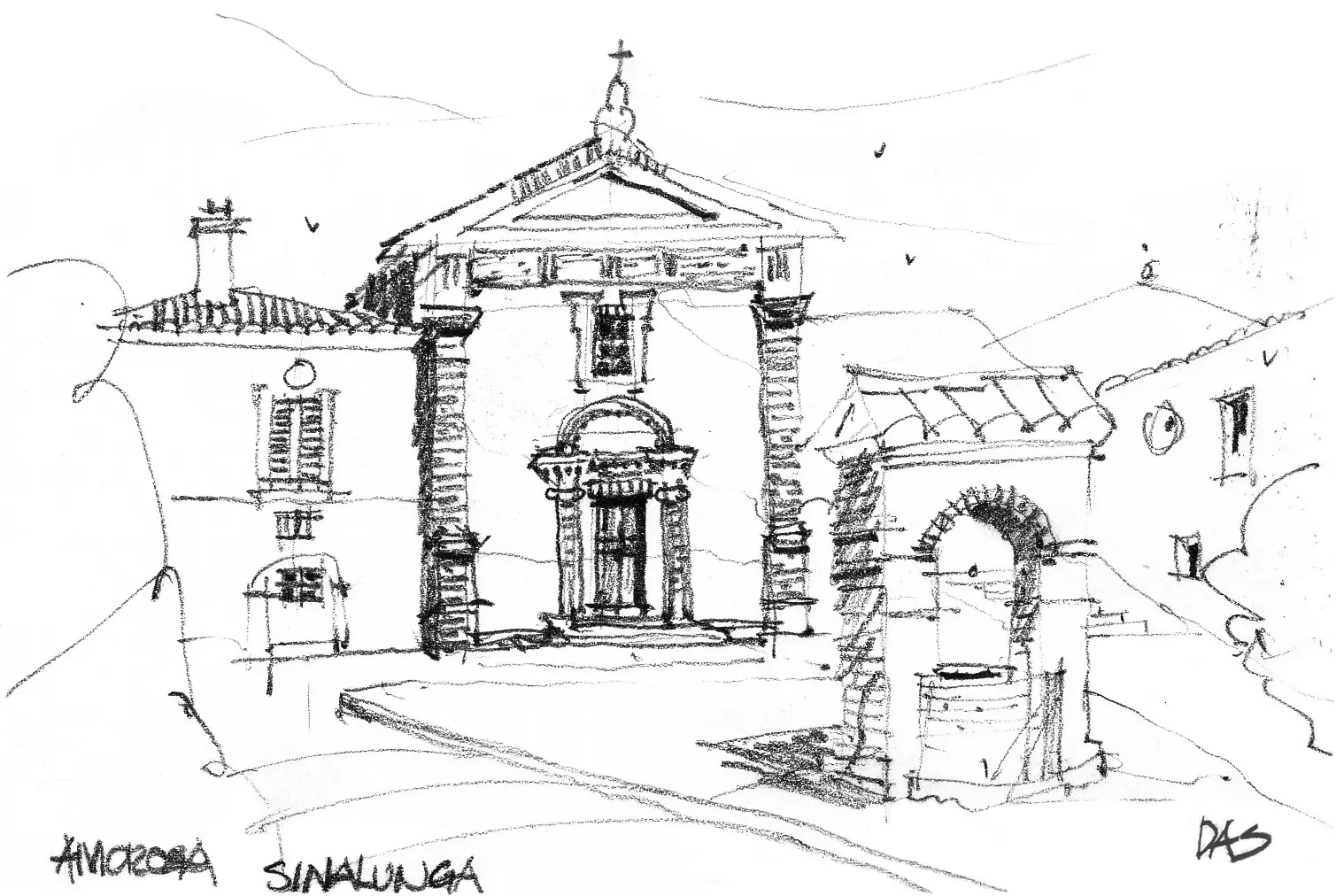
David sketches.
He has done it for decades.
Give him a sketchbook, a pencil and somewhere interesting to sit, and he’ll disappear into whatever is in front of him. A cathedral. A village street. A hotel courtyard. A window. A roofline. Some tiny architectural detail the rest of us walked past without noticing.
That’s the difference between a photograph and a sketch.
I can capture something in a fraction of a second.
David has to sit with it.
He looks harder. Figures out the proportions. Studies why something works. Decides what matters enough to put on the page and what doesn’t.
And somewhere in all that looking, he remembers it.
What Travel Brings Home
The funny thing is that we almost never know what will matter latWe aren’t walking around Europe thinking, Excellent molding detail. Let’s save that for a restaurant in Minneapolis in 2029.
We’re simply absorbing.
And then years later, something resurfaces.
A material we saw in Italy influences a project. A lighting idea from a tiny restaurant in Japan changes the way we think about a room. The feeling of walking into a hotel in Africa becomes part of a conversation about arrival. A color, texture, piece of furniture or beautifully simple detail works its way back into our thinking.
Not copied.
Remembered.
Travel has expanded our design vocabulary in ways we never could have learned sitting behind a desk.
That crossover between how we travel and what we do at Shea is one of the reasons Everyday Champagne exists in the first place.
We go because we love going.
But we come home seeing differently.



And Then There Are The Holiday Cards
About twenty years ago, we started finding another use for David’s growing collection of travel sketches.
Our holiday card.
Not an email. Not an animation. Not a clever social post destined to disappear twelve seconds later.
An actual card.
Printed on paper.
Signed by hand.
Sent through the mail.
Radical stuff.
Each year, we choose one of David’s sketches from somewhere we’ve traveled and turn it into a card for Shea clients, friends and people who have been part of our lives.
Over the years, those cards have quietly become a record of where we’ve been.
A sketch made sitting somewhere halfway around the world eventually lands in the mailbox of someone we’ve worked with back home.
I love that.
Because in a very small way, the cards connect all of it: our travels, David’s drawings, the people in our lives and the work we do at Shea.
Two Ways of Seeing
You’ll see both throughout Everyday Champagne.
My photographs.
David’s sketches.
They aren’t really meant as documentation, although I suppose that’s what they’ve become.
They’re simply how each of us captures something we don’t want to forget.
Because the more we travel, the more convinced we become that inspiration usually isn’t one enormous, life-changing revelation.
It’s thousands of tiny things.
You notice them.
You collect them.
You carry them home.
And every once in a while, one of them turns into something entirely new.
Apparently, paying attention has its benefits.